Verio Note Registry |
The week to October 14, 2026 |
Tech and consumer stocks, a nuclear fund and a low barrier
Notable notes this week A two-year note linked to Applied Materials, Oracle and Tesla shares, a combination new to the registry, pays 48.35% a year. 48.35% a year The highest coupon among the five notes in this issue, on a worst-of note whose weakest stock decides repayment. |
| 1 | This two-year worst-of contingent coupon note pays 48.35% a year. Repayment rests on a barrier at 70% of the starting level. A coupon this high comes with more risk: in a worst-of note, the weakest of the three stocks decides repayment. See the note → |
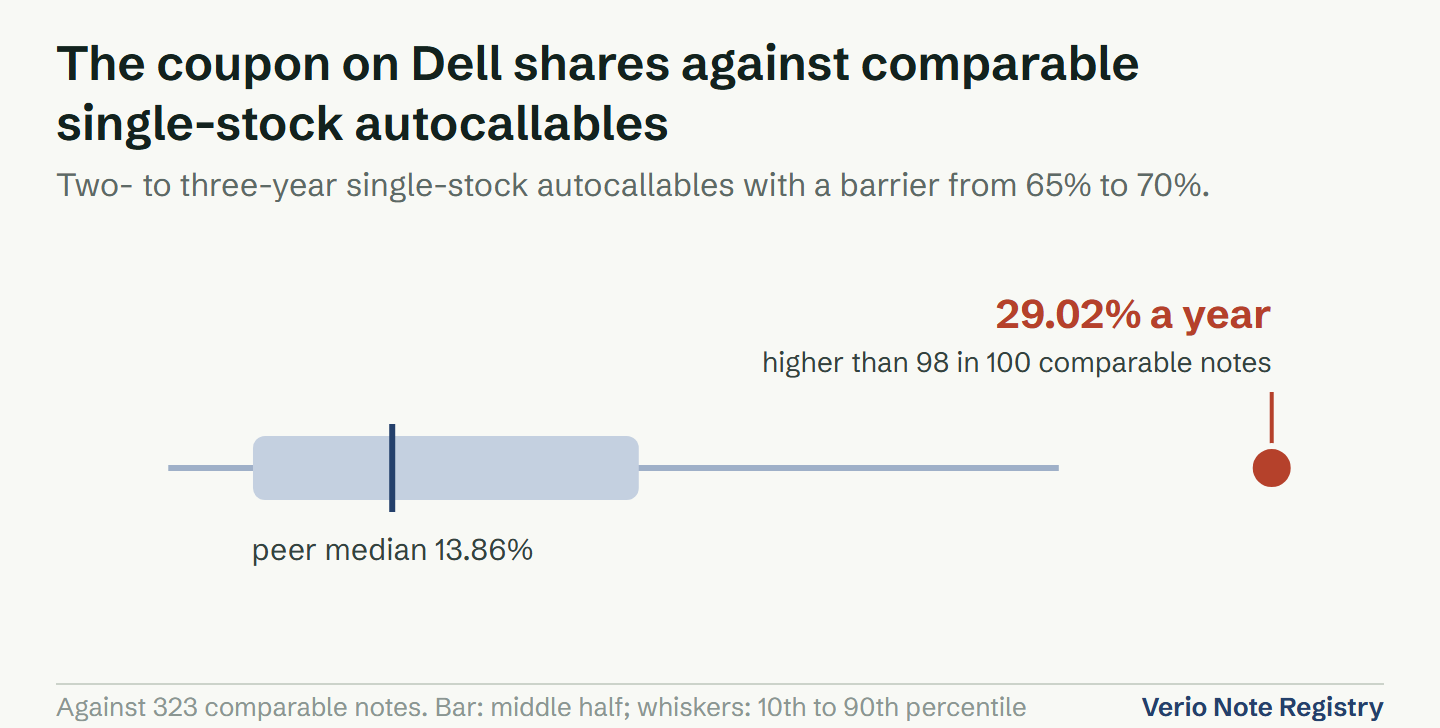
| 2 | Running two years, the note pays 29.02% a year, and repayment rests on a barrier at 65% of the starting level. The typical comparable note pays 13.9% a year, which puts this coupon higher than 98 in 100 comparable notes. See the note → |
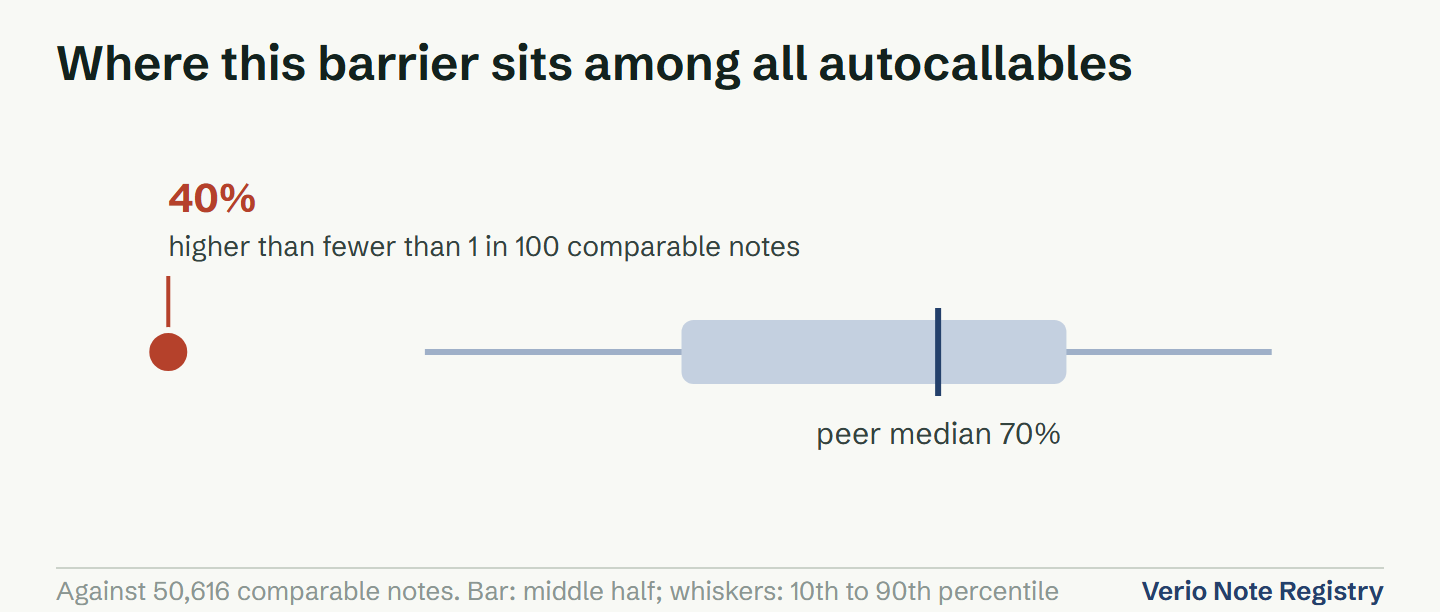
| 3 | Running three years, the worst-of autocallable pays 14.15% a year. Its barrier sits at 40% of the starting level, against a typical 70% for autocallables, so principal is repaid in full at maturity unless the weakest of the three stocks ends the term below that level. See the note → |
| 4 | The VanEck Uranium and Nuclear ETF is new to the registry, in a three-year worst-of autocallable that also tracks the State Street Utilities Select Sector SPDR ETF and a third fund. It pays 12.7% a year, and repayment rests on a barrier at 70% of the starting level. See the note → |
| 5 | Issued by Morgan Stanley for $67.4 million, this 32-month worst-of note is linked to the S&P 500, a Russell 2000 futures index and the State Street Utilities Select Sector SPDR ETF. It pays 11.3% a year, and a buffer absorbs the first losses down to 75% of the starting level. See the note → |
|
Every note, every term, traced to its SEC filing. Claude and other AI tools can read the registry too, through Connect your AI.
Start a free trial Past issues
Covers October 8, 2026 to October 14, 2026 against the 13 weeks before, using final pricing supplements filed with the SEC; recent filings reach the archive with a lag, so we compare shares rather than counts when windows differ. Underlined figures are computed from the registry. Terms as issued; market information, not investment advice.
Source: Verio Note Registry, noteregistry.com. As of 14 October 2026.
|
|